Journal Train
Why the best workout log is the one that says the least
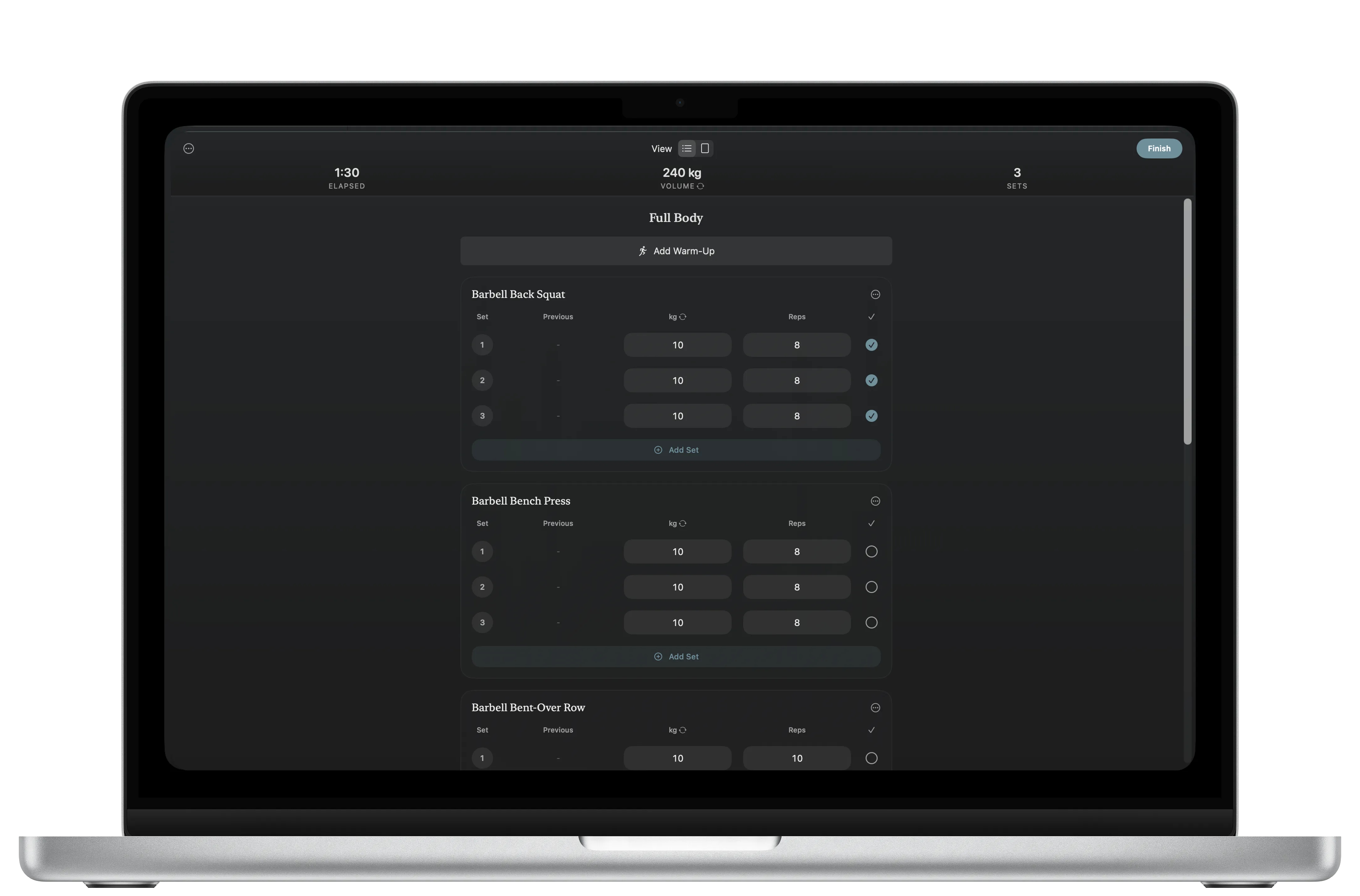
Open most fitness apps mid-workout and you will find a feed, a leaderboard, three banners and a push notification waiting. Somewhere underneath is the button you actually needed: log the set.
This is not an accident. Attention is the business model, and your workout is an engagement opportunity. But training is one of the few hours of the day that belongs entirely to you, and an app that interrupts it is working against the very thing it claims to serve.
What a log is actually for
A workout log has three honest jobs:
- Record the work, with as little friction as possible
- Tell you what you did last time, so you can do slightly more this time
- Show you, over months, that the work is adding up
Everything else is decoration. Progressive overload, the engine of nearly all strength progress, requires only an accurate memory of your last session. A log that does this instantly, without ceremony, beats a feature list of any length.
The cost of noise
Friction in logging is not a minor annoyance; it decides whether the log survives. Every extra tap between sets is a small tax, and taxes compound. People do not abandon training logs because the logs lack features. They abandon them because logging became a chore, and the chore lost to the rest period.
There is a second, quieter cost. Rest periods are where your phone is most dangerous. An app that opens onto a feed turns every rest into a doomscroll, and four scrolled rests add up to a worse session than one missed set ever would.
What minimalist looks like in practice
Minimalist does not mean sparse. It means everything present is load-bearing. In Oath, that principle shaped the whole training experience:
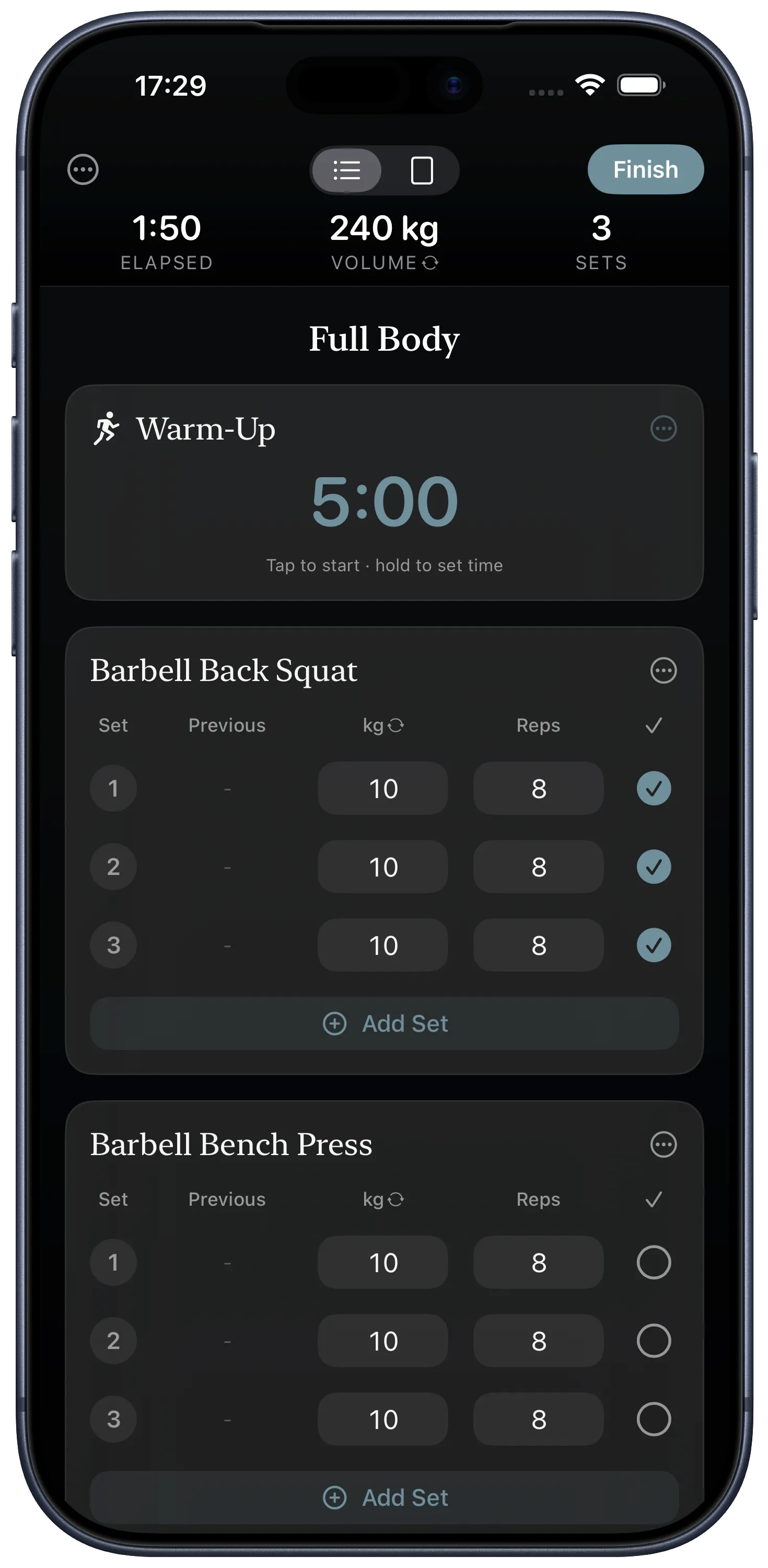
Focus mode shows one exercise at a time. Your sets, your last numbers, a rest timer that starts itself. Nothing else to look at, which is precisely the point.
More than 800 exercises, from barbell and machine work to bands, kettlebells, yoga and stretching, with your own custom exercises when the library is not enough.
Timers that mind themselves. Rest and get-ready timers run quietly, warm-up sets are a tap, and the app never asks for your attention while you are under a bar.
Records kept quietly. Personal bests and volume trends accumulate in the background. They are there when you go looking, and silent when you are working.
No feed. No adverts. No social layer. Your workout is not content.
Strength is a long game
The apps that shout tend to be built for spectacular weeks. Training is built on unremarkable ones: the hundredth session, logged in seconds, on a Tuesday nobody will remember. A calm log is easier to keep for years, and years are where the results live.
That is the bet Oath makes. The log gets out of your way, the records keep themselves, and the only thing asking for your attention is the next set.